How to avoid Fence Drooping: Contractor Techniques
@caidenfencing-contractorszzor561
Fence sagging is the sort of problem property owners observe each day and contractors discover every period. It begins tiny, a small droop between blog posts, a gate that drags out the pavement, a picket that looks exhausted. After that, if it's laid off, the fence starts imitating a big lever in the wind. The whole run gets larger, the spaces broaden, and repairs obtain a lot more costly due to the fact that you end up changing parts you can have protected early.
I'm not talking about elegant strategies that only look good in photos. I'm talking about the unglamorous choices fencing contractors make prior to the very first opening is dug: message type, article spacing, correct embedment, genuine supporting, appropriate equipment, and installation techniques that hold up under wet dirt, freeze-thaw, and everyday use.
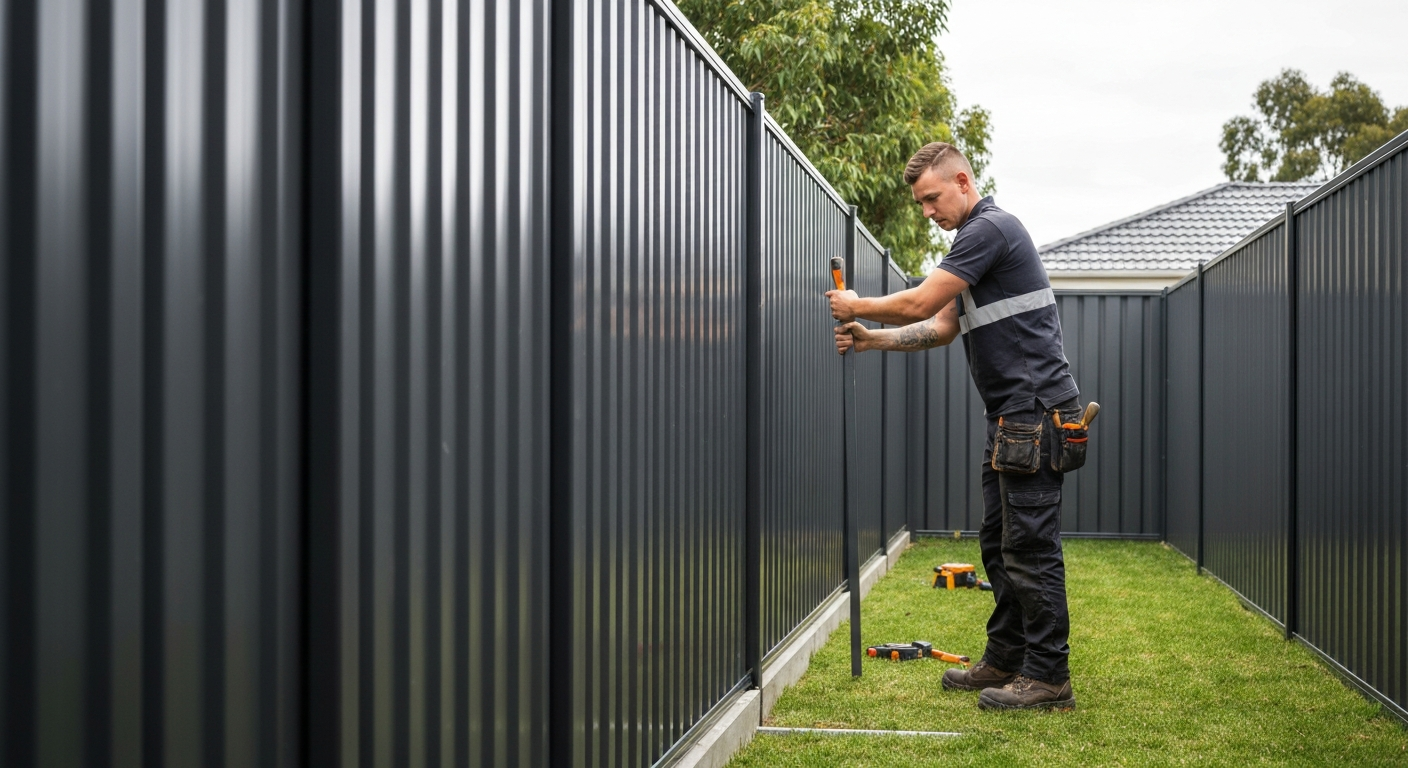
Below are the contractor strategies I rely on to stop fence drooping prior to it begins, plus the failing points that quietly create it.
What "sagging" usually suggests in the field
People call it sagging, however it can turn up in various ways. In some cases it's the entire panel going down a little. Often it's the pickets deforming and the rails losing straightness. Occasionally it's an entrance sagging on one joint side, that makes the lock miss also when everything else looks okay.
From a professional's viewpoint, these problems share a root cause: the fencing framework is not transferring loads the method it should, and the posts or rails aren't remaining in a steady geometry over time.
If you desire one practical mental model, think of the fence like a series of light beams sustained by posts. Every gust of wind presses, every person leans on it, and moisture changes dirt strength around the base. If the blog post activity is small however continuous, the rails adhere to. That's how a fencing that looks "fine" for a year can develop into a noticeably out-of-line fence 2 years later.
Start with post choice, not "much better wood later on"
A lot of fence sagging starts prior to setup ever before touches the ground. The message has to do 2 work: withstand flexing and withstand motion at the base. If the product or design can not take care of those work, you can brace it flawlessly on day one and still see droop later.
Wood articles: treat them like structural members
Pressure-treated timber prevails, yet not all dealt with supply executes the same way in the real world. Service providers have a tendency fence contractor Melbourne to search for blog posts that are right, attire, and rated for ground get in touch with. The straightness matters due to the fact that an article that's currently bowed will telegraph sag also if rails are set up tight.
The sizing matters also. Bigger articles reduce deflection. I'll usually spec bigger posts for long terms and for locations that capture wind. Smaller blog posts may work in tranquil yards, yet when the fencing is subjected, the flexing tons build up faster than home owners expect.
Metal messages: more powerful, however not instantly "sag-proof"
Many fence company installs usage metal posts because they stand up to rot. However drooping can still take place if the message is under-set, the link details are wrong, or the spacing is too vast. Steel blog posts require correct anchoring and equipment that can take care of lasting vibration and expansion.
Also, rust and drain issue. If water rests trapped around connections, you can get loosened hardware, which ends up being the weak link. A sagging pattern that shows up only in specific periods commonly indicates moisture monitoring, not simply strength.
Embedment depth and the dirt reality
Contractors don't established blog posts based on a single number. They set them based on soil condition, frost depth, and exactly how the ground acts after rain.
An article embedment that's too superficial is a timeless chauffeur of droop. The post shifts somewhat as soil fills, after that freezes, after that thaws. Also if the fence looks stable during completely dry weeks, repeated wetting and drying out can loosen the bordering soil and decrease support.
If you're in a freeze-thaw climate, you need to regard frost considerations. A specialist might comply with regional advice for depth, yet the real factor is this: embedment has to keep the post sustained where activity can start. For lots of locations, deeper is extra stable, and "good enough" can develop into "why is it drooping once more?"
Post setting method beats "just dig an opening"
It's not just deepness. The way the opening is prepared influences security. An untidy opening, fell down wall surfaces, and unequal backfill can create an article that settles unevenly.
Good setups typically include:
- A regular hole dimension for the post.
- Backfill that's compacted properly.
- Drainage logic, so water doesn't sit as a weak layer around the base.
If backfill hangs or not compacted, the post will certainly function itself slowly into the dirt. Over time, the rails lose placement, and sag comes to be visible.
Spacing and panel layout: stop extending the frame
Many fencing sags are truly rail deflection issues. If blog posts are too far apart for the fence height and the rail structure, the rails and intermediate participants bend under wind and loading. That flexing then produces a "sag line" throughout the fence.
Contractors handle this by matching spacing to:
- fence height
- rail thickness and number of rails
- picket and board stiffness
- exposure to wind
Long, undisturbed runs in open locations usually require more detailed post spacing or stronger rail systems. A fence company might provide standard spacing for price and speed, yet experienced specialists readjust on website. They're believing, "Where will the wind struck hardest? Where will a person lean? Where do we require much more messages to maintain the geometry inflexible?"
Bracing: the distinction between "standing" and "remaining straight"
Temporary building and construction supporting isn't the whole story. The goal is that the fencing frame stays in line while loads are applied, both during installment and after the fencing is built.
Contractors frequently add irreversible bracing at ends and edges, and they strengthen areas that have gates or high direct exposure. Without end supporting, the fence can "rack," implying it shifts side to side under side pressures. Racking develops sag patterns that appear like the fencing is falling between articles, however the system is the framework relocating shear.
End blog posts and edges are the support points
If you want a sag-resistant fencing, don't treat end blog posts like routine messages. They're working harder. An appropriate end blog post mount consists of supporting, right embedment, and equipment that maintains the leading and rail line from drifting.
In functional terms, many specialists make use of more robust posts, heavier rail links, or diagonal bracing at the ends. This is particularly vital for long runs. Every foot of unbraced run is a possibility for the line to "unwind" over time.
Hardware and accessory information that protect against rail creep
You can develop a fencing framework that looks tight when it's brand-new and still have it loosen later on. Sagging usually accelerates when adapters permit movement under cyclic loading. Wind and vibration consistently bent the rail joints. Over months, that micro-movement becomes measurable.
Use the ideal fasteners, the best spacing
Fasteners need to withstand corrosion and preserve clamping force. Service providers avoid dissimilar materials when feasible. For instance, using hardware that reacts in a wet environment can loosen and degrade prior to the wood even reveals obvious rot.
Fastener positioning matters too. If screws are also close to board ends, wood can split. If they're as well sporadic, the rail can change. If the link isn't limited at setup, the fencing will "discover" a relaxed position, and sag comes to be the visible symptom.
Don't let rails "float" on careless alignment
One of the quiet tricks that divides a pro-looking fence from a fencing that droops later is how rails are straightened while attachment. If rails are slightly out of aircraft, they can bind under tons. Binding can cause bolts to loosen or boards to wear.
Good fencing work includes taking time to develop line and level, after that attaching with constant stress so links are solid, not simply "in position."
Concrete, gravel, or backfill mix: choosing what actually locks the post
Some house owners listen to "established messages in concrete" and assume it's always best. Contractors recognize it's even more nuanced. Concrete can help maintain a blog post, yet it likewise transforms water drainage actions around the base and can catch wetness if done badly. That matters because entraped wetness accelerates timber degeneration, particularly if the post end remains wet.
Gravel-only backfill can also be problematic if it does not compact well or if it drains pipes water away so fast that it undermines stability. Loosened gravel can permit tiny negotiation, which ends up being sag.
The service provider attitude: security plus regulated moisture
Most professional techniques go for:
- stable support around the post
- drainage that lowers long-term saturation at the base
- consistent compaction so the message does not resolve unevenly
If you're working with a fencing contractor, ask what their basic practice is for your soil type. A crew that improvisates every task based on what gets on the vehicle may still develop a good fencing, but sag risk increases when the base approach is inconsistent.
Gates: sagging enjoys them, so plan for gate tons first
A gateway is a stress test. The joints and lock side experience duplicated opening forces, and the fencing structure sees additional torsion. A gate that droops usually indicate one or more of the following: not enough hinge blog post support, poor supporting, weak rails where the gate affixes, or worn/incorrect hardware.
Hinge-side strength is not optional
If the joint article isn't stiff and well anchored, eviction will certainly go down gradually. Many gate sag problems turn up in the second year, when hardware loosened up a little and the framework has already shifted under duplicated use.
Contractors usually strengthen joint posts more than various other messages in the run. Occasionally they upsize articles, boost embedment, or include diagonal bracing that regular areas do not require. The goal is to maintain the hinge axis secure so the gate never "walks" downward.
Latch alignment additionally matters
Even if the gate does not noticeably droop, imbalance can trigger lock misses, which leads people to press more challenging, lean on eviction, and efficiently include leverage. That presses the droop process much faster. A pro mount checks entrance operation multiple times throughout assembly, not simply at the end.
Wet-season planning: how moisture turns "limited" into "saggy"
Moisture doesn't simply rot wood. It alters dirt toughness, swells some materials, and loosens up joints with repeated expansion and contraction. Fence drooping typically becomes worse after heavy rain.
That's why professionals respect:
- how backfill is compacted
- whether water can stream far from article bases
- whether timber end grain and subjected locations are protected
- whether the fencing design traps water versus articles or rails
In particular, poor message drain can lead to soft areas in the dirt. The article progressively tilts and the rails comply with. If you've ever seen a fence line that stays directly in dry months and sags after a wet season, you're seeing soil assistance modifications in action.
Wind and exposure: secure the locations that take the hit
If your backyard encounters open areas, a main road, or a consistent wind, your fence requires more rigidness than a fence a sheltered corner. A fencing contractor may suggest additional supporting or closer spacing in subjected runs, and it's money well spent.
I have actually strolled job sites where home owners whined concerning "negative timber" just to locate the fencing was installed with very little bracing in an exceptionally windy area. The material held up, yet the framework geometry wasn't created for the load. Under duplicated gusts, the fencing slowly repositions itself. That rearranging develops sag.
Trade-off is actual: tighter post spacing and added bracing price a lot more. However so do duplicated repair work and partial rebuilds, and the "economical" choice frequently stops working sooner.
A sensible on-site checklist specialists use
You requested for avoidance, so below's the kind of assuming that protects against sagging prior to it begins. If you're working with a fencing company or examining proposals from a fencing contractor, utilize this as your reference.
- Confirm post embedment deepness matches neighborhood problems and your fencing height.
- Make certain end messages and corners are supported, not treated like basic posts.
- Check post spacing and rail layout for your direct exposure and anticipated loading.
- Inspect fasteners and connection details for rust resistance and solid clamping.
- Verify entrance hinge-side support and smooth latch alignment prior to crew cleanup.
That list isn't around micromanaging. It's about catching the typical shortcuts that trigger sag.
Common installment blunders that develop drooping later
Contractors see the very same failings across different communities. Some are obvious, like messages established also shallow. Others are refined, like hardware mounted in a manner that enables movement.
Here are the blunders that most often lead to sagging:
1) Messages set with inconsistent embedment or bad compaction
Even little distinctions can turn up after the fencing has experienced wet weather condition and a freeze-thaw cycle.2) Way too much span in between messages for the rail stiffness
A fence can look penalty at set up, after that sag as rails bend under wind or as the fencing takes human contact.3) Weak end conditions
When end messages and edges are not appropriately supported, the fence can rack, and the line drifts.
4) Equipment loosening from wrong products or inadequate fastening
Deterioration, splitting, or under-fastening result in slip at joints.5) Gateway installed without hinge-side reinforcement
Gateway sag can be a devoted trouble, not simply a "fence sag" problem.If you can identify these throughout the develop, the repair is usually simple. If you wait until the fence is already drooping, the fix frequently comes to be more facility due to the fact that you have to correct positioning plus change worried components.
How to speak to a specialist without obtaining marketed a mystery
Sometimes home owners get stuck in a loop: the fencing droops, they recall, and they get obscure responses like "wood moves" or "wind takes place." Wind does occur, however great installment ought to make up it.
A strong fencing company communication seems like specifics. They ought to be able to describe exactly how they're developing your fencing to stand up to side tons and base movement.
If you intend to pressure-test the strategy, ask questions like:
- What blog post size, embedment deepness, and bracing approach do you make use of for my fencing elevation and run length?
- How do you manage gateway loads, particularly on the joint side?
- What hardware and fastening pattern do you make use of, and why?
- How do you prepare backfill and compaction around the messages in my soil type?
Those questions require the conversation into setup realities, not basic promises.
Repair vs protect against: when "repairing it later on" expenses more
Preventing drooping is usually less costly than fixing sagging, however there are instances where repair is fine. If only one tiny section drooped slightly, you might be able to re-level and add braces or tighten up connections. If the blog posts have relocated significantly, you're usually reconstructing the architectural support.
As a policy, when several messages reveal misalignment or when the fencing line has a constant descending contour between many messages, the base and framing have actually already shifted. Then, service providers hang around detecting initially, then making a decision whether support can bring back geometry or whether replacement is the more secure path.
That's why prevention issues. The most effective fencing service providers treat installment as structural work, not carpentry that you can rush.
Final take: sagging is a systems problem, and avoidance is the job
Fence sagging rarely originates from one reason. It's the combined result of message motion at the base, rail deflection in between messages, link looseness, moisture adjustments, and direct exposure to lateral tons. Specialists protect against sagging by designing the fence as an inflexible, secure system, then constructing it with interest to the uninteresting details that keep geometry intact.
If you're hiring a fencing contractor or contrasting quotes from a fence company, lean right into those structural concerns: post sizing and embedment, bracing at ends and corners, rail assistance, hardware options, and gate reinforcement. That's where the distinction lives. A fence that stands up to sag is not good luck. It's preparation, craftsmanship, and the self-control to do the ideal point under actual website conditions.